Small Business SEO Tips: Compete With Big Brands Locally
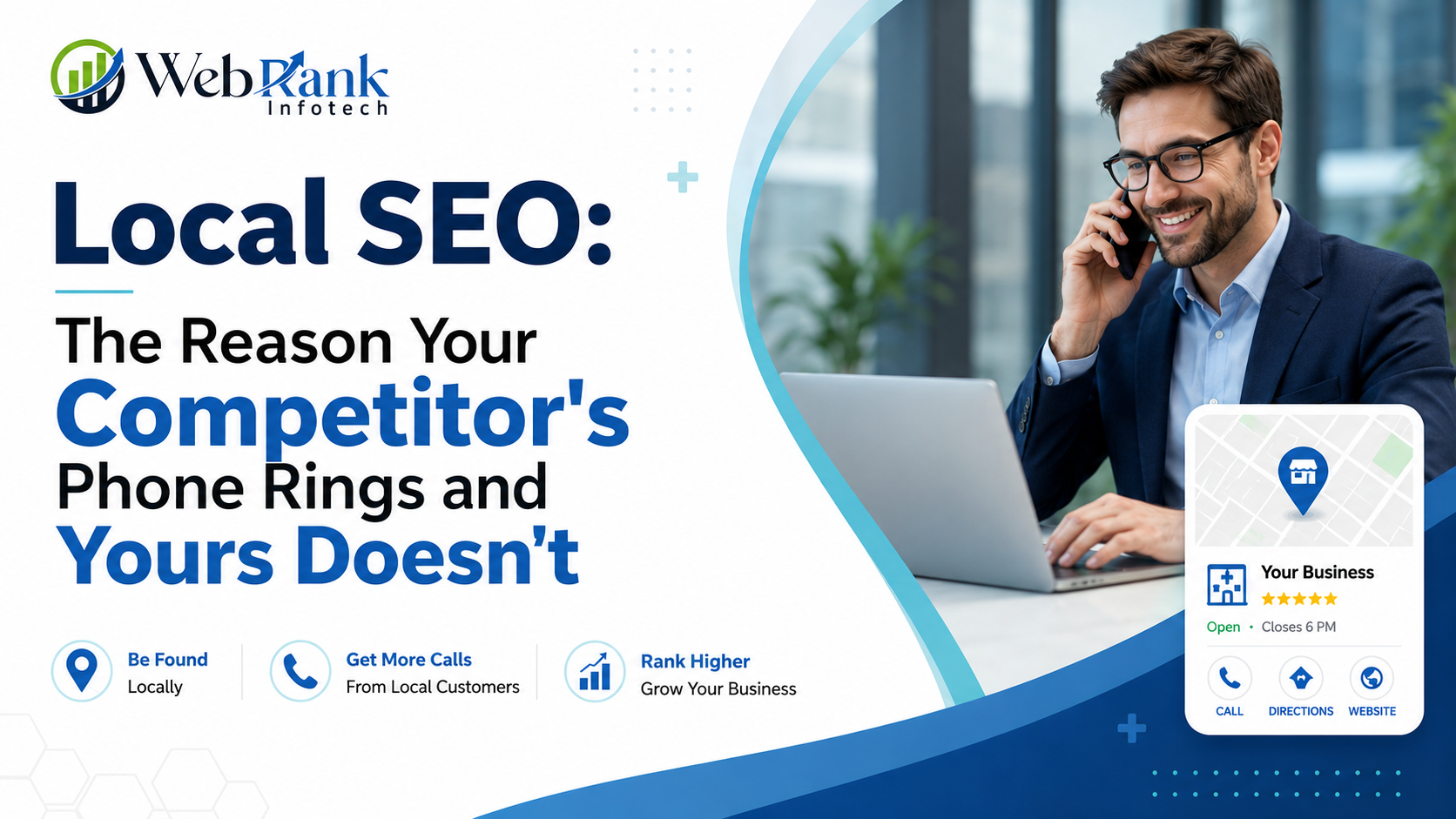
Big brands do not outrank small businesses in local search because of budget. They outrank them when small businesses skip the basics that actually decide local rankings — a complete Google Business Profile, consistent local content, real reviews, and clean technical SEO. Local search rewards relevance, proximity, and trust — three signals a small, focused business can build faster than any national brand — and this guide breaks down exactly how to do that, step by step. Why Do Big Brands Still Lose to Small Businesses in Local Search? Google’s local ranking system does not run on domain size. It runs on three factors published directly by Google: relevance, distance, and prominence. A national brand’s website might carry more backlinks and more domain authority overall, but none of that guarantees a strong position in the local pack — the map results that show up for searches with local intent. Distance to the searcher and relevance to the exact query often outweigh raw authority in these results. A big brand with one generic listing serving an entire city cannot match a local business with a fully optimized profile, hyperlocal content, and steady reviews from real nearby customers. This is why a two-person plumbing business regularly outranks a national franchise for “plumber near me” searches in its own neighborhood. Big brands also tend to under-invest in local signals because their marketing teams are built for scale, not for street-level precision. They rarely respond to reviews individually, rarely publish location-specific content, and often have inconsistent business listings across directories. Every one of those gaps is an opening. Quick summary: Local search ranks on relevance, distance, and prominence — not domain size. Big brands often neglect location-specific signals like review responses and NAP consistency, which gives small businesses with a focused, well-maintained local presence a genuine structural advantage over national competitors. How to Set Up a Google Business Profile That Outranks National Competitors? Google Business Profile (GBP) is the single highest-leverage asset for local rankings. Most small businesses claim it and stop there. Winning it requires ongoing management. Step 1: Claim and Verify the Correct Category Choose the most specific primary category available, not the broadest one. A “family-owned Italian restaurant” should select “Italian Restaurant,” not just “Restaurant.” Specific categories match specific search intent more precisely, which improves relevance scoring. Step 2: Keep NAP Data 100% Consistent Name, Address, and Phone number (NAP) must match exactly across the GBP listing, the website, and every directory listing. Inconsistent NAP data confuses Google’s trust signals and can quietly suppress rankings even when everything else is optimized. Step 3: Add Location-Specific Attributes and Services List every service or product category the business offers, using the exact terms customers search for. A bakery should list “custom birthday cakes,” “eggless cakes,” and “same-day delivery” as separate service entries rather than one vague “bakery items” line. Step 4: Post Weekly Updates and Real Photos Businesses that post GBP updates weekly and upload fresh, geotagged photos regularly signal ongoing activity, which correlates with stronger local pack visibility. Stock photos and stale listings signal the opposite. Step 5: Respond to Every Review Within 48 Hours Response rate and response speed are both measurable engagement signals. A fast, personalized response to a three-star review often does more for trust than five generic five-star reviews with no reply. Quick summary: A fully optimized Google Business Profile — correct category, consistent NAP, detailed service listings, fresh photos, and fast review responses — is the fastest path to outranking a big brand’s generic, under-managed listing in local map results. What Local Keywords Should a Small Business Target Instead of Broad Terms? Big brands compete for broad, high-volume keywords like “digital marketing agency” or “best pizza.” Small businesses win by targeting long-tail, geo-specific, and intent-rich variations that broad brand campaigns ignore entirely. Keyword Type Example (Broad) Example (Local, High-Intent) Service + Location SEO services SEO services in Chandigarh Service + Modifier Digital marketing agency Affordable digital marketing agency for small business Near-Me Intent Marketing agency Digital marketing agency near me Problem-Based SEO help Why is my local business not showing on Google Maps Neighborhood-Specific Bakery Eggless cake shop in Sector 34 Chandigarh Long-tail, location-based keywords convert at a higher rate because the searcher has already narrowed their intent to something specific and nearby. Tools like Google’s own “People also search for” section, Google Search Console’s query report, and free keyword tools can surface these patterns directly from real search behavior in a target area. Quick summary: Broad keywords favor big brands with bigger ad budgets and domain authority. Long-tail, location-modified, and problem-based keywords favor small businesses because they match narrower, higher-converting search intent with far less competition. How to Create Local Content That Big Brands Cannot Copy? National brands publish generic content because it has to work everywhere. That is precisely the gap a local business can exploit. Publish Neighborhood and Community Content Content tied to local events, local news, or community involvement builds relevance signals a corporate content team will never replicate at scale. A landscaping business writing about “best plants for Chandigarh’s summer heat” earns relevance a national chain’s generic “top 10 plants” post cannot match locally. Build Location Pages for Every Service Area A business serving multiple nearby towns should build a dedicated page per location rather than one page trying to rank for all of them. Each page should include unique content — not duplicated text with only the city name swapped — covering local landmarks, service specifics, and testimonials from that area. Answer Hyperlocal Questions Directly Content that answers questions like “which areas does this business deliver to” or “is parking available near this store” satisfies real searcher intent that big brand content almost never addresses. This kind of specificity is also what AI-driven search overviews increasingly pull from directly. Quick summary: Big brand content is built for scale, not specificity. Small businesses win by publishing neighborhood-relevant content, unique per-location service pages, and direct answers to hyperlocal questions — content a
Small Business SEO Tips: Compete With Big Brands Locally Read More »